Why Does Thick Sheet Thermoforming Require Fresh Materials Instead of Inventory Stock?
A customer asked me the other day why we need to extrude sheet materials first after placing an order. Why can't we pre-make inventory of different materials and thicknesses, then when customers place orders, we can directly thermoform and CNC cut? Wouldn't that make delivery faster?
Low-density plastics like ABS, PP, and HDPE easily absorb moisture and deteriorate. After 7-10 days, they affect forming quality1, so we always order materials fresh and produce immediately.
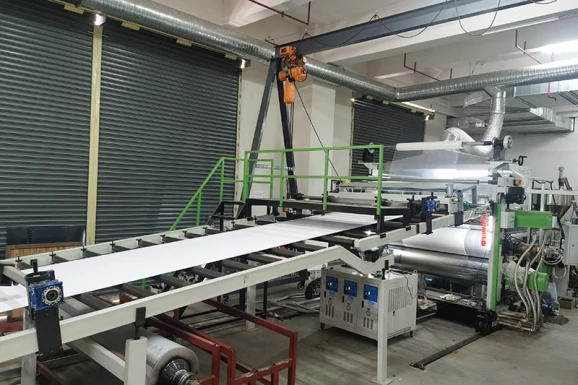
After 15 years in thermoforming, I've seen too many defective products caused by moisture-absorbed materials. Let me share this issue with you today.
Why Are Some Materials So Sensitive?
Not all plastics are like this. It's mainly those low-density ones.
ABS, PP, and HDPE low-density thermoplastics have porous molecular structures that absorb moisture from the air, causing bubbling, cracking, and poor surface finish during heating and forming processes.
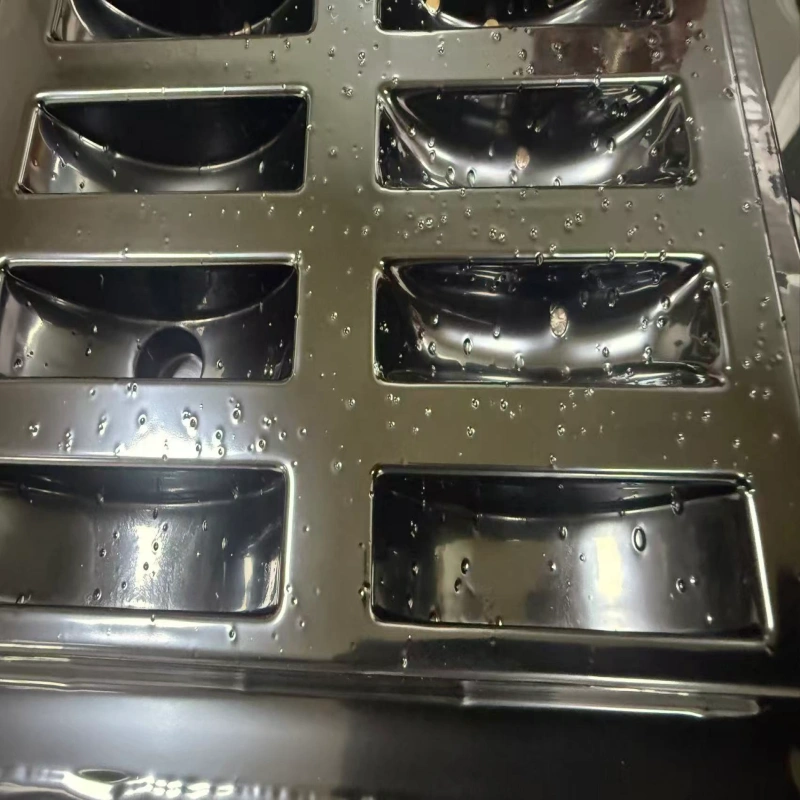
The science behind this is simple. These materials have lower molecular density, creating microscopic gaps between polymer chains. Water molecules easily penetrate these gaps. When we heat the material during thermoforming, this trapped moisture turns into steam and causes defects.
In my factory, I've seen countless parts scrapped because someone used materials that sat too long in humid conditions. The obvious signs are easy to identify:
- Small bubbles on the surface
- Weak weld lines where material flows meet
- Cloudiness in transparent parts
- Dimensional instability after cooling
When I first started, I didn't understand this. Once I used ABS sheets that had been sitting for half a month. The finished products came out full of pitting. We had to scrap that batch of materials, reorder, and reschedule production, losing tens of thousands.
Since then, I learned these materials absorb water like sponges. Especially during rainy seasons, when humidity rises, materials become unusable within days.
Our factory's current experience shows:
- ABS: 7 days maximum, beyond that is risky
- PP: Slightly better, but can't exceed 10 days
- HDPE: Relatively stable, but 15 days is the limit
Shelf Life Comparison of Different Materials
| Material | Safe Usage Period | Rainy Season | Storage Requirements |
|---|---|---|---|
| ABS | 7-10 days | 3-5 days | Sealed + desiccant |
| PP | 7-14 days | 5-7 days | Ventilated and dry |
| HDPE | 10-15 days | 7-10 days | Light-proof and moisture-proof |
Last year I encountered a rush order. The customer was pushing hard, so I thought I'd use inventory ABS to make a batch first. We dried the inventory materials for 8 hours before starting production, but after actual thermoforming, we found the finished surface still had some slight effects, not looking as good as products made from fresh materials. The customer understood, but the project was still delayed a week.
Why Can PETG and PC Be Stored as Inventory?2
High-density materials are different.
PETG, PC, and PMMA high-density materials have tightly arranged molecules that don't easily allow moisture penetration3, so they can be safely stored for months without deterioration.
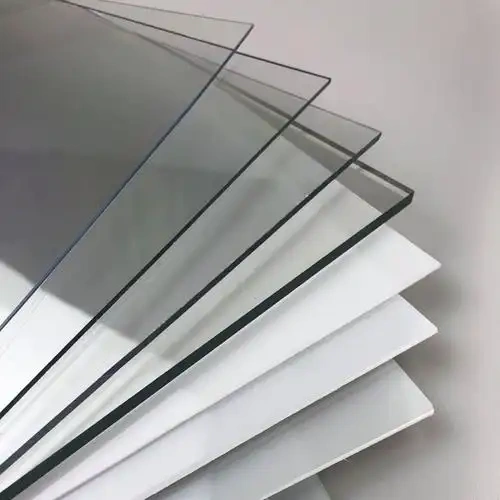
So our factory stocks some common colors of PETG and PC, like transparent, white, and black. When customers place orders, we can start work immediately without waiting for materials.
But custom colors still need to be ordered fresh. Custom colors must be color-matched according to customer Pantone numbers, so they can only be made fresh with no inventory.
I remember a medical device customer who required transparent PETG. Because we had inventory, we could start tooling and sampling the same day. If it were custom-colored ABS, just waiting for materials would take a week.
Our Inventory Strategy
| Material Type | Stocked Colors | Delivery Advantage |
|---|---|---|
| PETG | Clear, white, black | Same-day start |
| PC | Clear, black | 2-3 days |
| PMMA | Clear, white | 1-2 days |
| ABS/PP | No inventory | Need 7-10 days for materials |
That said, even for high-density materials, we regularly check inventory. Materials over six months old basically don't get used - we'd rather take the cost loss to ensure quality.
How Much Does Weather Affect Production?
Southern China friends should understand - during rainy season, everything gets moldy easily.
When humidity exceeds 70%, ABS materials that could normally sit for 10 days must be used within 3-5 days4, or problems will definitely occur.
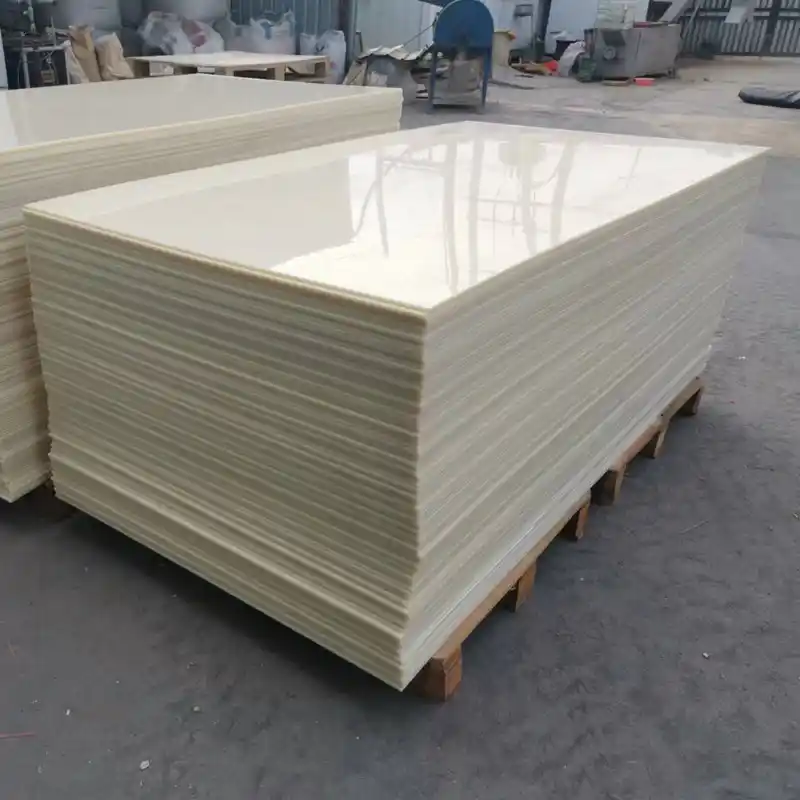
Our factory is in Shenzhen, and March-June every year is the most challenging rainy season. We still take ABS orders without hesitation, but must strictly monitor each batch of materials. From the moment sheets come off the extrusion line, we must rush to schedule production, usually getting them on the thermoforming machine within 3 days, not giving materials a chance to absorb moisture.
Our current countermeasures:
- Industrial dehumidifiers running 24/7
- Materials sealed in vacuum bags for storage
- Careful coordination of timing from extrusion line to thermoforming production line
How Does This Affect Your Projects?
Understanding material characteristics helps you better plan production schedules.
If projects specify ABS or PP materials, you must allow sufficient time for material procurement and production, typically 7-10 days.
Customers often ask why delivery times can't be shortened. I can only say this is determined by the material's inherent properties. ABS has unique mechanical and chemical properties that many applications require5 - you can't randomly substitute materials.
Recently an automotive interior customer had a very urgent project, but specifically needed flame-retardant ABS. We expedited the extrusion and completed all processes within 3 days, but that was already the limit.
Timeline Planning for Different Projects
- ABS projects: 7 days materials + 3 days production = 10+ days minimum
- PP projects: 5 days materials + 2 days production = 7+ days minimum
- PETG projects: Same-day material start + 1 day production = 2+ days minimum
- PC projects: Same-day material start + 2 days production = 3+ days minimum
What customers care most about is the balance between quality and delivery time. We insist on using fresh materials to avoid rework troubles later.
Although delivery times might be longer, product quality is stable, and customers understand this principle.
Conclusion
Fresh materials aren't us being difficult - it's a necessary measure to ensure product quality.
"The Influence of Moisture Absorption and Desorption by the ABS ...", https://pmc.ncbi.nlm.nih.gov/articles/PMC11084188/. Research on polymer moisture absorption demonstrates that hygroscopic thermoplastics can absorb sufficient moisture to cause processing defects, though specific timeframes vary with ambient conditions and material grade. Evidence role: mechanism; source type: research. Supports: hygroscopic behavior of low-density thermoplastics and moisture-related processing defects. Scope note: The 7-10 day timeframe is context-dependent rather than a universal constant across all grades and conditions ↩
"Occurrence, toxicity and remediation of polyethylene terephthalate ...", https://pmc.ncbi.nlm.nih.gov/articles/PMC8755403/. High-density amorphous polymers such as polycarbonate (PC) and polyethylene terephthalate glycol (PETG) exhibit significantly lower moisture absorption rates compared to lower-density thermoplastics due to their tightly packed molecular chains and reduced free volume, which limits water molecule diffusion into the polymer matrix. Evidence role: mechanism; source type: paper. Supports: the relationship between polymer molecular density/structure and moisture absorption resistance in PETG, PC, and PMMA materials. ↩
"Study of Degradation and Absorption Behavior of PLA and PETG", https://pmc.ncbi.nlm.nih.gov/articles/PMC8036839/. Material property databases indicate that while polycarbonate and PMMA do absorb moisture and typically require drying before processing, their equilibrium moisture content and absorption rates differ from commodity thermoplastics, though PETG's glycol modification actually increases hygroscopicity compared to standard PET. Evidence role: general_support; source type: research. Supports: relative moisture resistance of engineering thermoplastics compared to commodity plastics. Scope note: PETG is actually more hygroscopic than PET; the claim oversimplifies the moisture sensitivity hierarchy among these materials ↩
"The Influence of Moisture Absorption and Desorption by the ABS ...", https://pmc.ncbi.nlm.nih.gov/articles/PMC11084188/. Polymer moisture sorption studies demonstrate that equilibrium moisture content increases with relative humidity following sorption isotherms, and that absorption kinetics accelerate at higher humidity levels, though specific timeframes depend on material thickness and geometry. Evidence role: mechanism; source type: paper. Supports: the relationship between ambient relative humidity and moisture absorption rates in hygroscopic polymers. Scope note: The specific 3-5 day timeframe is experiential rather than derived from controlled studies ↩
"Acrylonitrile butadiene styrene - Wikipedia", https://en.wikipedia.org/wiki/Acrylonitrile_butadiene_styrene. ABS is valued for its combination of impact resistance, dimensional stability, and ease of processing, properties derived from its three-phase terpolymer structure, making it widely used in applications requiring toughness and surface finish. Evidence role: general_support; source type: encyclopedia. Supports: the characteristic properties of ABS that make it suitable for specific applications. ↩