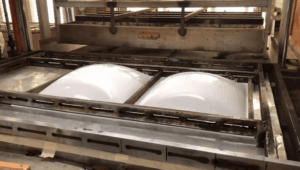
Vacuum forming1 seems like the perfect manufacturing solution until you discover its hidden limitations. Many manufacturers praise its speed and cost-effectiveness, but what about the drawbacks nobody talks about?
Vacuum forming offers excellent cost-effectiveness and speed for simple plastic parts, but struggles with complex designs2 and thick materials. Understanding both advantages and limitations helps manufacturers choose the right process for their specific needs.
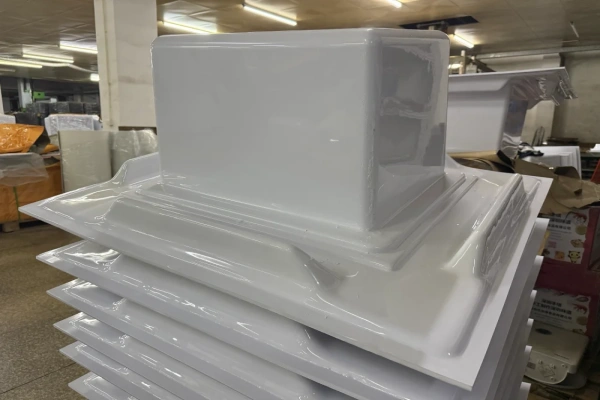
Before jumping into vacuum forming for your next project, you need the complete picture. Every manufacturing process has trade-offs, and vacuum forming is no exception. Let's break down what works, what doesn't, and when you should consider alternatives.
What Makes Vacuum Forming So Attractive to Manufacturers?
Vacuum forming1 attracts manufacturers because it delivers results without breaking the bank. Most people see the obvious benefits but miss the subtle advantages that make this process shine.
The main appeal lies in vacuum forming's ability to produce consistent parts quickly with minimal upfront investment. However, this simplicity comes with specific limitations that affect part complexity and material thickness3.
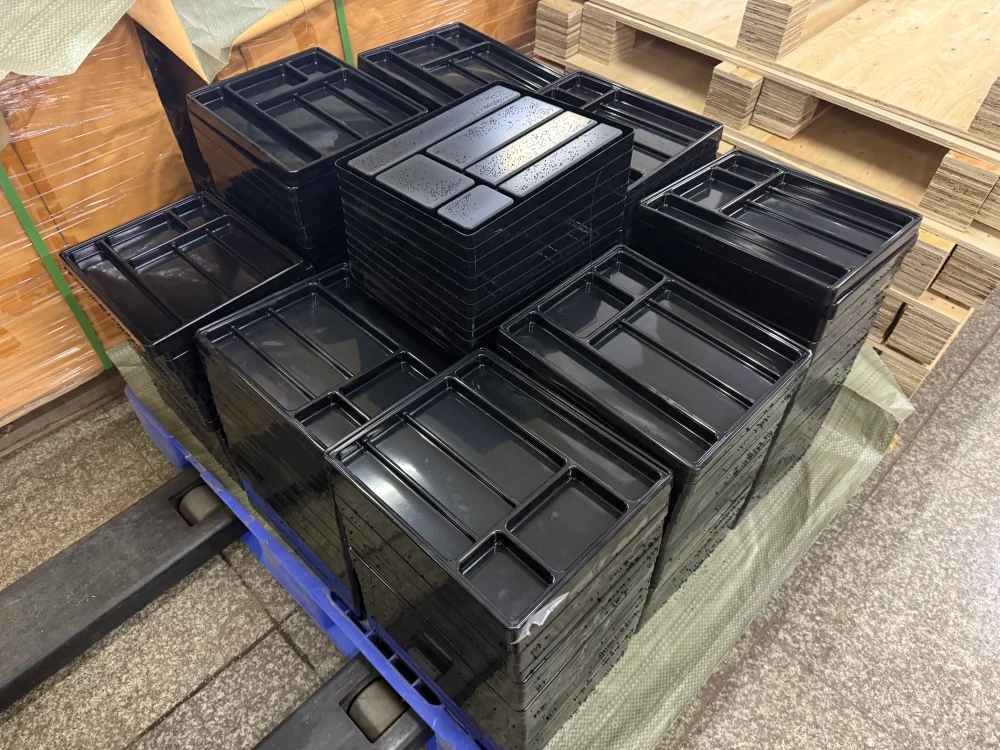
Complete Vacuum Forming Advantages and Disadvantages Comparison
Understanding both sides helps you make informed decisions about whether vacuum forming fits your project needs. Here's a comprehensive comparison of the key advantages and disadvantages:
| Advantages ✓ | Disadvantages ✗ |
|---|---|
| Low tooling costs - Molds can be made from aluminum, wood, or foam for a fraction of injection molding costs | Limited part complexity - Cannot create intricate details, undercuts, or complex internal features |
| Fast production cycles - Individual parts can be formed in minutes once setup is complete | Uneven wall thickness - Material stretches during forming, creating thin spots in deep areas |
| Quick setup and changeover - Can switch between different molds rapidly for flexible production | Single part production - Only one part can be made per cycle, limiting high-volume efficiency |
| Material flexibility - Works with various thermoplastics like ABS, PVC, PETG, and polystyrene | Shallow draw limitations - Deep parts are difficult to form without material tearing or excessive thinning |
| Low minimum order quantities - Economical for small batch production and prototyping | Additional finishing required - Parts need trimming and may require secondary operations for final quality |
| Recyclable waste - Excess material can be recycled back into new plastic sheets | Tolerance limitations - Difficult to achieve tight tolerances consistently, typically ±0.020" at best |
| Rapid prototyping capability - Ideal for testing design concepts quickly and cost-effectively | Mold wear concerns - Softer, cheaper molds wear out faster, requiring replacement |
| Large part capability - Can handle bigger parts than many other plastic forming processes | Sharp corner issues - Plastic tends to bridge across sharp edges rather than conforming tightly |
| Lower energy consumption - Only heats thin sheets rather than melting bulk material | Surface quality limits - May show mold imperfections or debris, especially on clear parts |
| Easy operator training - Less complex than injection molding, reducing training time and costs | Structural strength concerns - Generally weaker than injection molded parts, especially at thin areas |
This comparison shows that vacuum forming excels in cost-effectiveness4 and flexibility but struggles with complexity and precision. The process works best when these trade-offs align with your project requirements.
The speed advantage goes beyond just cycle time. Once you have your mold ready, you can pump out parts consistently in just minutes. Setup time is minimal too, making it perfect for companies that need flexibility. Material flexibility is another major benefit, working with various thermoplastics like ABS, polystyrene, PVC, and PETG to match your specific application needs.
What Problems Will You Face with Vacuum Forming?
Every manufacturer discovers vacuum forming's limitations the hard way. These aren't deal-breakers, but they definitely affect what you can accomplish and how much you'll spend.
The biggest challenges involve thickness variation, limited detail capability, and finishing requirements5 that add time and cost to your production process.
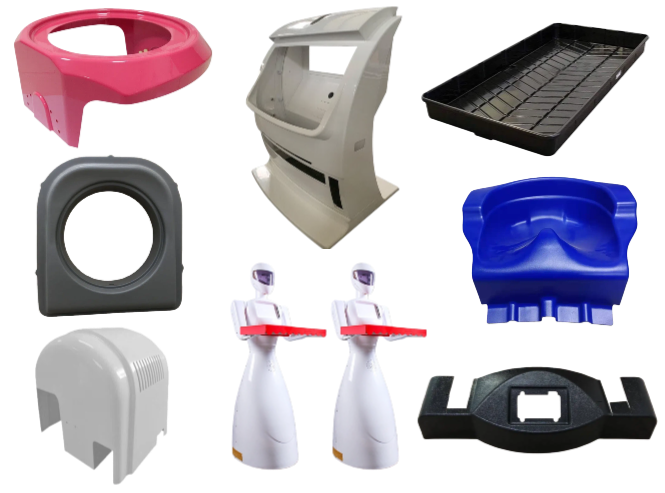
Design Limitations That Impact Your Product
Vacuum forming works best with simple, shallow designs. Deep draws create problems because the plastic stretches too much, causing thin spots or tears. The general rule is that draw depth shouldn't exceed the smallest dimension of your part.
Complex undercuts are nearly impossible without special mold designs that complicate the process. Sharp corners don't form well either - the plastic tends to bridge across sharp edges rather than conforming tightly. Wall thickness becomes uneven as the plastic stretches, potentially creating weak points that affect part strength and appearance.
Hidden Costs That Sneak Up On You
Finishing work often requires additional steps that weren't in your original budget. Parts usually need trimming, which means extra labor or CNC machining time. Quality control becomes more critical because defects aren't always obvious until after forming. Mold maintenance costs money too, particularly with softer mold materials that wear out faster.
When Should You Choose Vacuum Forming Over Other Methods?
Despite its limitations, vacuum forming excels in specific situations. Knowing when it's the right choice saves time, money, and headaches down the road.
Vacuum forming works best for shallow parts, prototyping, low-volume production, and applications where cost matters more than precision or complexity.
Applications Where Vacuum Forming Dominates
Packaging applications represent vacuum forming's sweet spot. Food containers, blister packs, and retail packaging don't need complex geometries or tight tolerances. Automotive interior panels work well because they're typically large, shallow parts with gentle curves that fit vacuum forming's capabilities perfectly.
Prototyping benefits enormously from vacuum forming's speed6 and low tooling costs. You can test multiple design iterations quickly without major financial commitments. Medical device housings often work well for non-critical components, and point-of-purchase displays benefit from the ability to create large, lightweight parts economically.
How Do You Know Vacuum Forming Is Wrong for Your Project?
Recognizing when vacuum forming won't work saves everyone time and frustration. Some warning signs are obvious, others require more careful consideration.
Avoid vacuum forming for thick-walled parts, complex geometries, high-precision applications, or when you need structural strength comparable to injection molded parts.
Clear Warning Signs to Avoid Costly Mistakes
If your part needs walls thicker than about 0.25 inches, vacuum forming probably won't work. Complex internal features like threads, snap fits, and living hinges need injection molding's precision. High-volume production eventually favors other processes - the crossover point is usually around 10,000-50,000 parts annually.
Structural applications need careful evaluation. Vacuum formed parts often can't match injection molded strength, especially at stress concentration points. Tight tolerance requirements are difficult to achieve consistently, typically only reaching ±0.020 inches at best.
Conclusion
Vacuum forming1 offers real advantages for the right applications, but understanding its limitations prevents costly mistakes and ensures project success.
Explore the advantages of vacuum forming to understand why it's a popular choice for manufacturers. ↩
Understand the challenges vacuum forming faces with intricate designs and how it affects production. ↩
Find out how varying material thickness impacts the vacuum forming process and part quality. ↩
Learn how vacuum forming can save costs in manufacturing processes compared to other methods. ↩
Explore the additional steps needed for finishing vacuum formed parts to meet quality standards. ↩
Discover how vacuum forming's speed can enhance production efficiency and reduce lead times. ↩