Vacuum Forming & Thermoforming Processes
Advanced plastic manufacturing techniques that shape heated thermoplastic sheets into precise three-dimensional products using vacuum pressure and specialized tooling
Process Introduction
Vacuum forming is an advanced manufacturing process that transforms heated thermoplastic sheets into complex three-dimensional products. The process begins by placing a precisely crafted mold within a semi-automatic forming machine.
A plastic sheet is positioned above the mold and heated until it reaches optimal malleability. The machine then automatically raises the mold, allowing the softened material to conform perfectly to the mold's surface geometry.
A vacuum pump removes air between the mold and sheet, creating negative pressure that ensures complete material contact. Finally, an integrated cooling system solidifies the formed part, enabling clean release from the tooling.
Manufacturing Capabilities
Production Facility
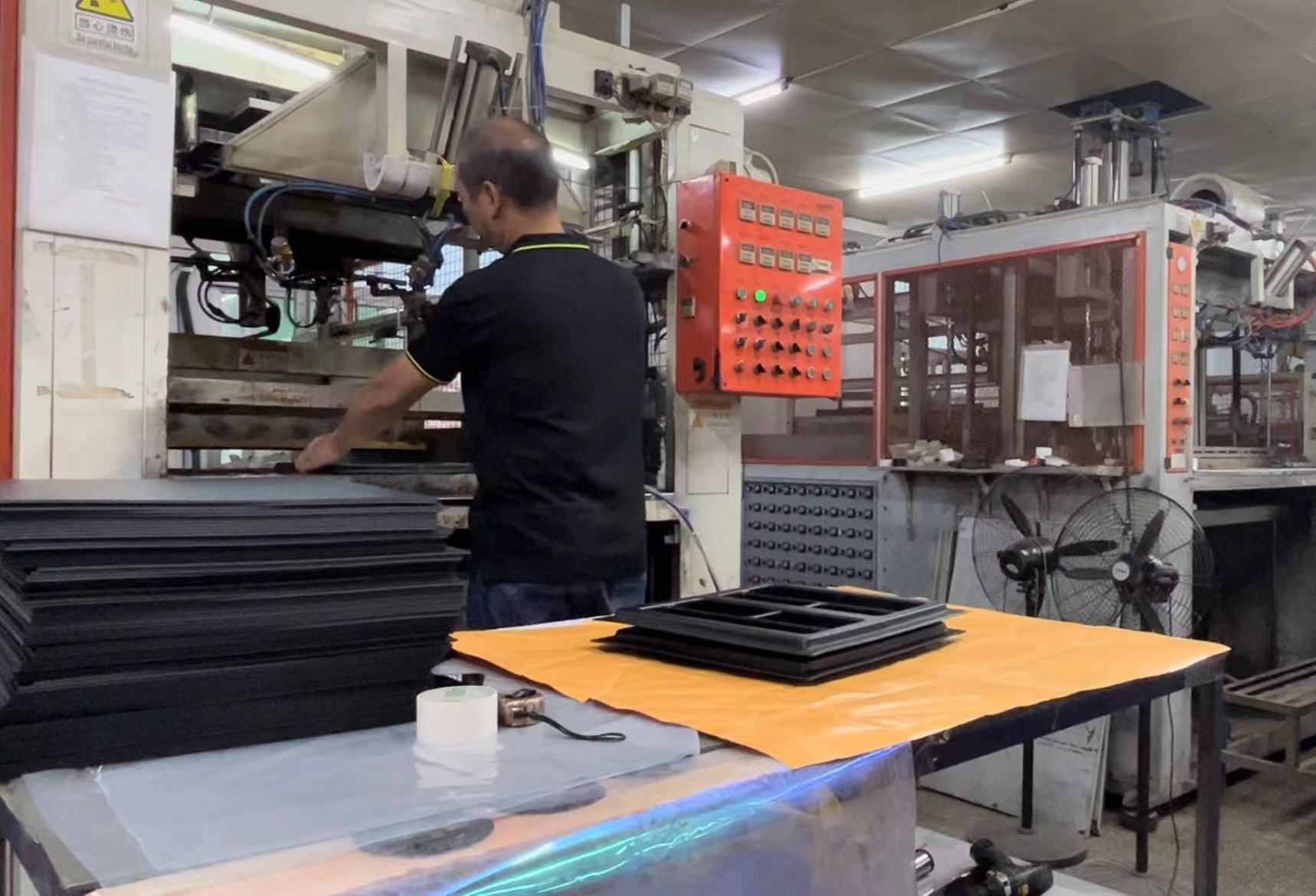
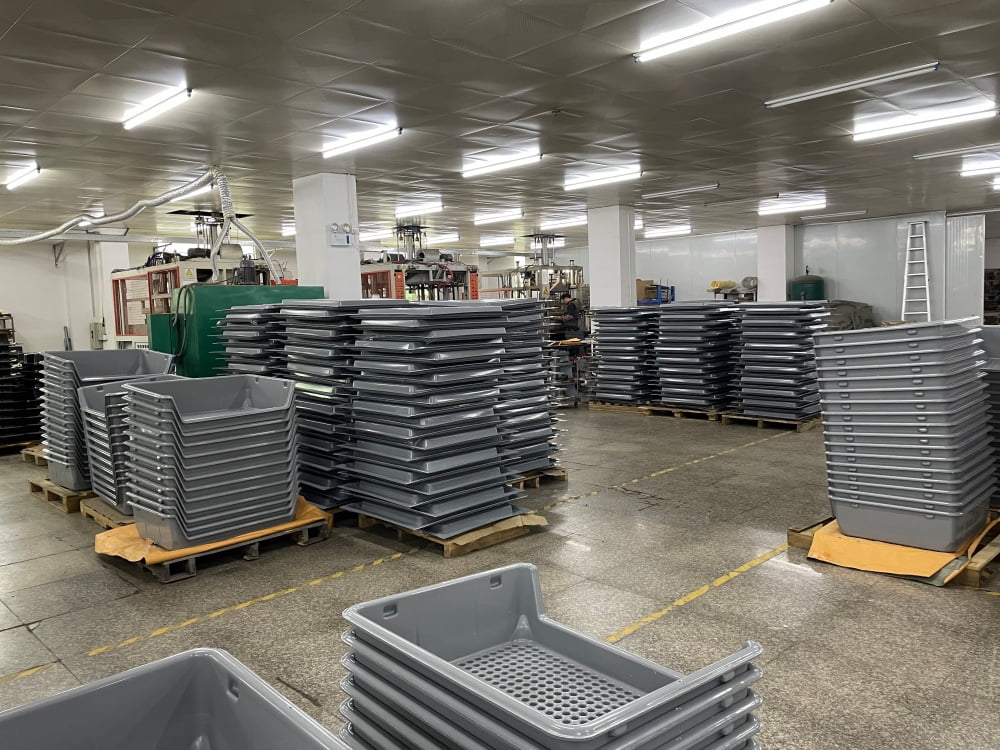
Our state-of-the-art manufacturing facility houses advanced vacuum forming equipment capable of handling projects from prototyping to high-volume production runs.
Multiple forming stations with varying bed sizes accommodate parts ranging from small components to large-scale industrial panels, ensuring optimal tooling selection for each project.
- • High-precision temperature control systems
- • Automated material handling equipment
- • Quality inspection and measurement stations
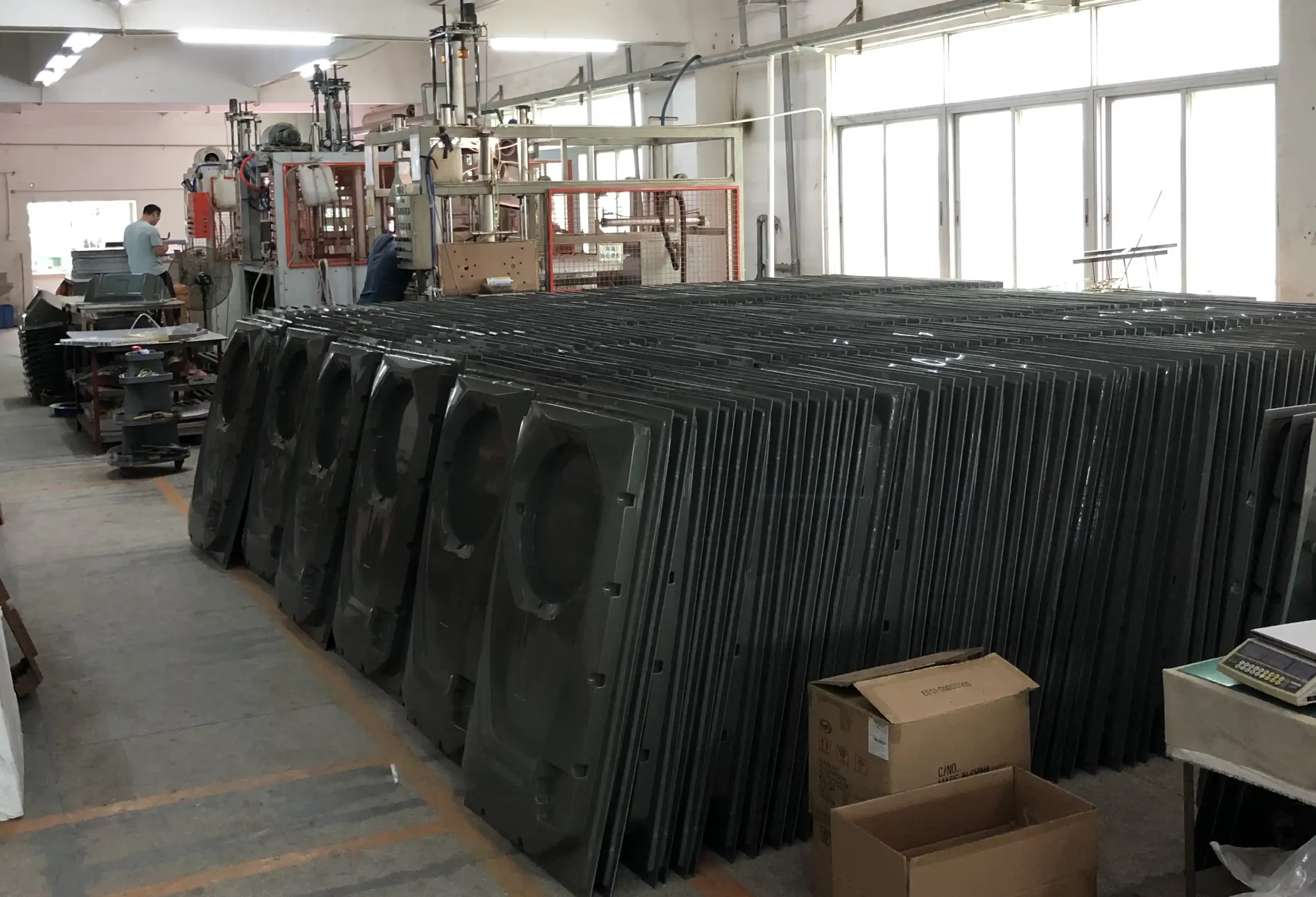
Large Format Equipment
Industrial-scale forming machines for oversized components and automotive panels.
Precision Tooling
Custom molds and fixtures designed for optimal part geometry and surface finish.
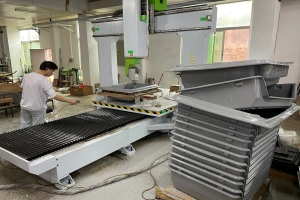
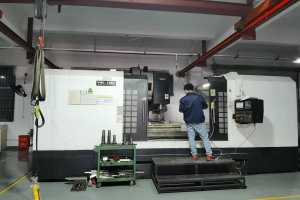
5-Axis CNC Trimming
Precision multi-axis machining for complex geometries and superior edge finishing.
Manufacturing Workflow
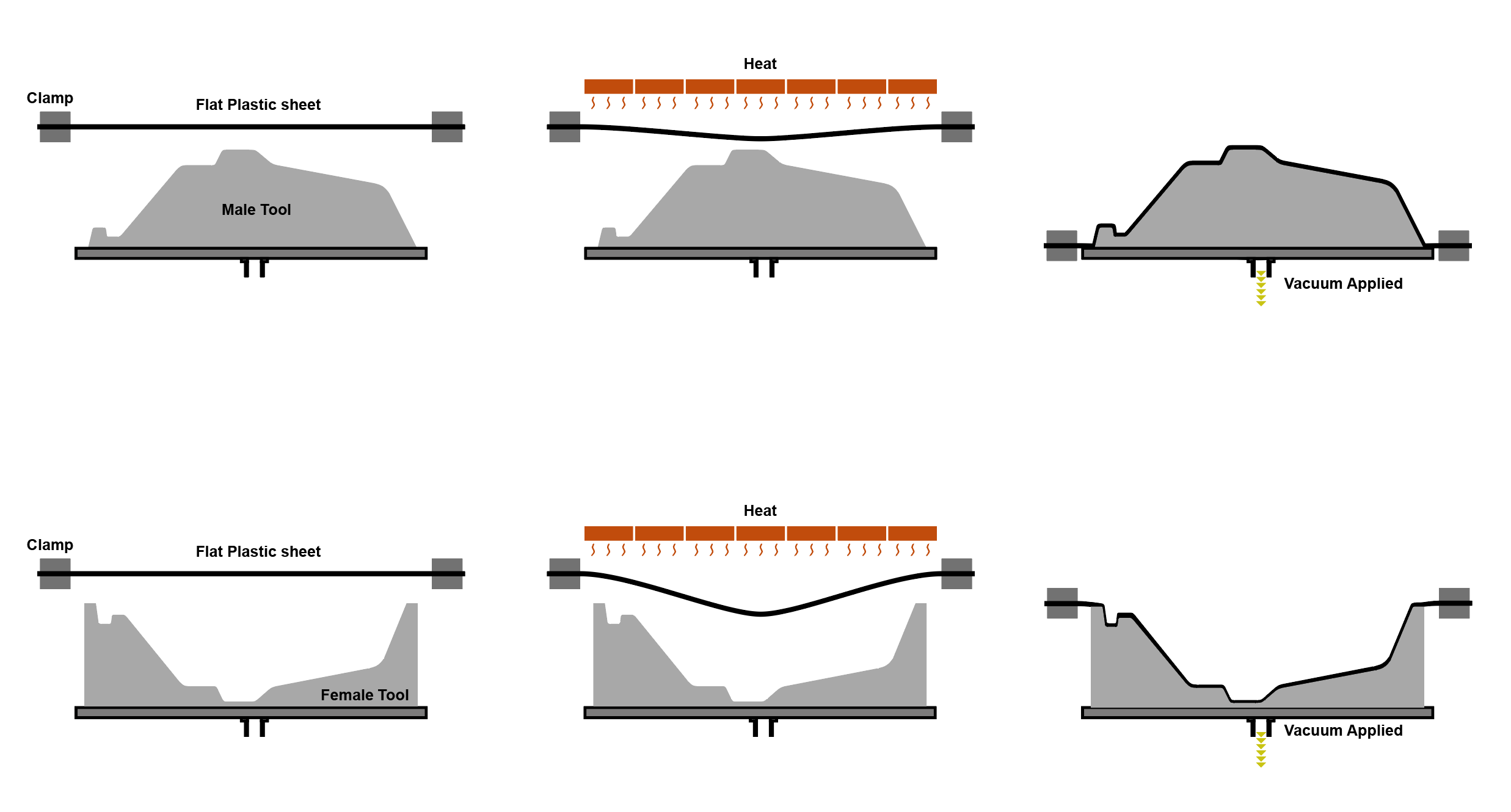
Process Steps
Material Preparation
Thermoplastic sheets are cut to size and pre-heated to optimal forming temperature
Mold Positioning
Custom tooling is positioned and heated to prevent material cooling during forming
Vacuum Forming
Material is drawn over the mold using vacuum pressure for precise shape formation
Cooling & Finishing
Controlled cooling solidifies the part before trimming and finishing operations
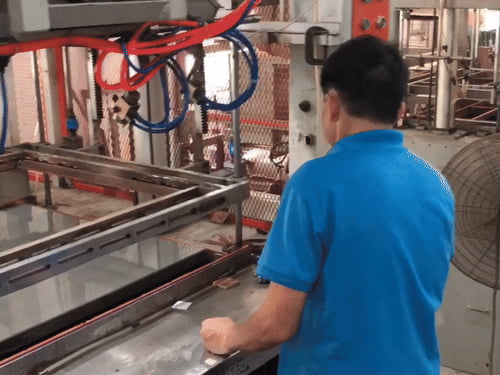
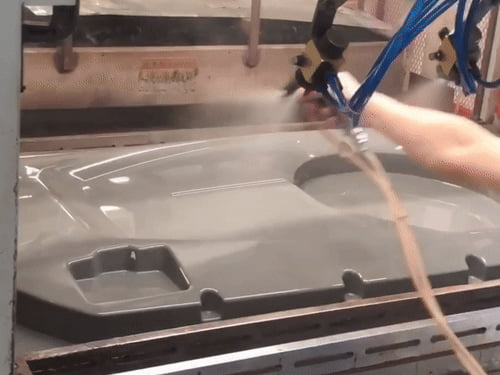
Heating Stage
Precise temperature control for optimal material plasticity
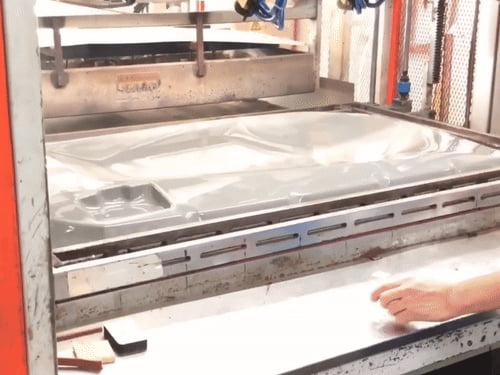
Forming Process
Vacuum pressure creates precise part geometry
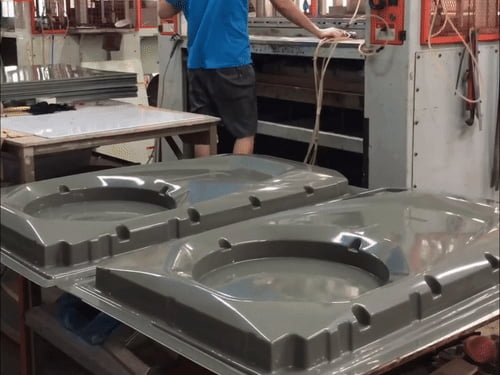
Cooling Phase
Controlled cooling maintains dimensional accuracy
Finishing
Precision trimming and surface treatment
Primary Forming Methods
Positive Molding (Male Mold)
The plastic sheet is drawn over a convex mold form. This method provides excellent dimensional control on the outer surface where the material contacts the mold directly.
- • Superior exterior surface finish
- • Precise outer dimensional control
- • Ideal for decorative applications
Negative Molding (Female Mold)
The plastic sheet is drawn into a concave mold cavity. This approach ensures precise interior dimensions and is preferred for functional components requiring accurate internal geometry.
- • Accurate internal dimensions
- • Better material distribution
- • Suitable for assembly components
Method Selection Criteria
Our engineering team analyzes each project's specific requirements to determine the optimal forming approach. Key considerations include:
Assembly Requirements
Critical fit tolerances and mating surface specifications
Aesthetic Standards
Surface finish quality and visual appearance priorities
Functional Performance
Structural integrity and operational requirements
Advanced Forming Techniques
Pressure-Assisted Forming
Combines vacuum with positive air pressure to achieve superior material distribution and detail reproduction in complex geometries.
Pre-stretch Technology
Initial material expansion creates uniform thickness distribution, reducing stress concentrations and improving part consistency.
Multi-Level Forming
Sequential forming stages enable complex part geometries with varying depth requirements and intricate detail features.
Precision Temperature Management
Real-Time Monitoring
Advanced temperature sensors continuously monitor mold surface temperatures, ensuring optimal forming conditions for each material type and thickness specification.
Material-Specific Parameters
Our database contains optimized temperature profiles for various thermoplastic materials, enabling consistent quality across different polymer types and sheet thicknesses.
Quality Assurance
Precise thermal control enhances dimensional accuracy, surface quality, and mechanical properties while reducing cycle times and energy consumption.
Material & Design Advantages
Large Part Capability
Excellent material stretchability enables formation of large-scale components with consistent wall thickness and structural integrity.
Cost-Effective Tooling
Simplified mold structures compared to injection molding result in lower tooling costs and faster prototype development cycles.
Complex Geometries
Superior material flow characteristics enable formation of intricate three-dimensional shapes and curved surfaces with excellent detail reproduction.
Rapid Prototyping
Fast tooling fabrication and setup enables quick design iterations and accelerated product development timelines.
Enhanced Durability
Thick-wall construction provides superior resistance to environmental stresses, UV exposure, and mechanical impact forces.
Production Flexibility
Ideal for medium to low volume production runs with the flexibility to accommodate design modifications efficiently.
Industry Applications
Automotive
Bumpers, interior panels, roof boxes, dashboard components
Industrial
Machine covers, protective housings, equipment enclosures
Medical
Equipment housings, protective shields, medical device components
Packaging
Product trays, protective packaging, display containers
Expert Vacuum Forming Solutions
Partner with our experienced team to bring your product concepts to life using advanced thermoforming technologies and precision manufacturing processes.